
You delivered the support. The participant was happy, your worker wrote clear notes and the invoice went out on time.

Blog

October 15, 2026
Behaviour Support Plans and Restrictive Practices: A Compliance Guide for NDIS Providers
A registered NDIS provider can lawfully use a regulated restrictive practice only when three things line up.

October 08, 2026
Supported Living Audits: Policies, Common Gaps and How to Prepare
Supported Independent Living sits at the heart of many participants’ lives. It covers the help people receive every day in their own home, often shared with other residents.

September 29, 2026
Self-Managed vs Plan-Managed vs NDIA-Managed: What Each Means for Your Provider Payments
Every NDIS participant’s plan carries a funding management type, and that one setting decides who pays your invoice, how fast the money lands and which pricing rules apply. Get it wrong at intake and you can deliver a month of excellent support, then spend the next month chasing a rejected claim.

September 03, 2026
Tips for NDIS Invoicing: How to Get Paid Faster and Stay Compliant
Ask any NDIS provider what keeps them awake at night, and cash flow is usually near the top of the list.

August 31, 2026
How to Write a Functional Capacity Report for Better NDIS Plan Outcomes
Every allied health team we coach eventually asks the same question, usually after a plan comes back with half the therapy hours they asked for: what did we do wrong?

August 21, 2026
Serving Veterans and NDIS Participants: How to Run a Dual DVA and NDIS Practice Compliantly
If you already deliver services under the National Disability Insurance Scheme (NDIS), adding Department of Veterans’ Affairs (DVA) clients can feel like a natural next step.
August 14, 2026
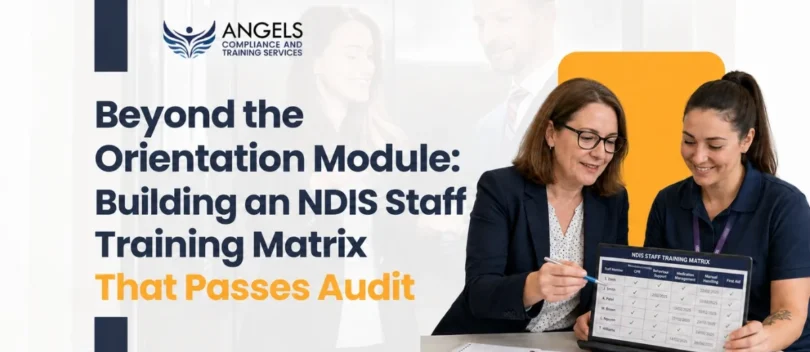
Beyond the Orientation Module: Building an NDIS Staff Training Matrix That Passes Audit
Every registered NDIS provider knows the Worker Orientation Module is non-negotiable.

August 07, 2026
Therapy Rates Just Changed: What the 2026 NDIS Line-Item Split Means for Allied Health Providers
For most therapy providers, the headline out of the 2026-27 Annual Pricing Review was the rate movement, psychology up, dietetics and exercise physiology down, occupational therapy

July 31, 2026
DVA Provider Registration for Allied Health: AHPRA Auto-Registration vs Manual Application
Most allied health professionals do not submit a DVA registration application at all.