

Most allied health professionals do not submit a DVA registration application at all. Your Medicare provider number triggers automatic registration with the Department of Veterans’ Affairs. A smaller group, including neuropsychologists, general social workers, orthotists, optical dispensers and lymphoedema providers, must register directly with DVA before they can treat or claim.
The catch that costs practitioners weeks: AHPRA registration is not the trigger. That single misunderstanding is behind most delayed first claims, and we unpack it below.
Why DVA provider registration for allied health confuses so many practitioners
If you already hold NDIS or Medicare credentials, you would reasonably expect DVA to work the same way an application, a portal, an assessment, an approval letter.
It doesn’t.
DVA’s model is largely passive. For most disciplines, there is no form, no portal login, and critically, no confirmation email. You are simply registered, and you find out when your first claim either pays or bounces. Practitioners who wait for an approval letter that is never coming can lose a month of billable veteran work.
For the minority of disciplines outside that automatic pathway, the opposite is true: nothing happens until you contact DVA directly. Treating a Veteran Card holder before that registration is finalised means you may not be able to claim for the work at all and you cannot charge the veteran to recover it.
Knowing which side of that line you sit on is the whole game.
The AHPRA myth: what actually triggers automatic registration
Search this topic, and you will find article after article stating that “AHPRA-registered professionals are automatically registered with DVA.” It is repeated so often it has become accepted wisdom.
It is not accurate, and the inaccuracy matters.
The trigger is the Medicare provider number issued by Services Australia, not your AHPRA registration. Once you understand that, two things stop being surprising:
- Several professions with no AHPRA registration at all are auto-registered.AHPRA regulates 16 health professions. Dietitians, exercise physiologists, speechpathologists and diabetes educators are not among them; they are self-regulated through their own professional bodies. Yet all four are automatically registered with DVA once they hold a Medicare provider number.
- Some AHPRA-registered practitioners stillhave toapply manually. A neuropsychologist is registered with AHPRA as a psychologist. That AHPRA registration does not carry them into DVA’s neuropsychology item numbers. They must register with DVA separately.
So the real question is never “am I AHPRA registered?” It is: “is my discipline on DVA’s automatic list, and do I hold a current Medicare provider number for the location I’m working from?”
Who is automatically registered with DVA?
According to DVA’s Become a DVA health care provider guidance, your Medicare provider number automatically registers you if you are a:
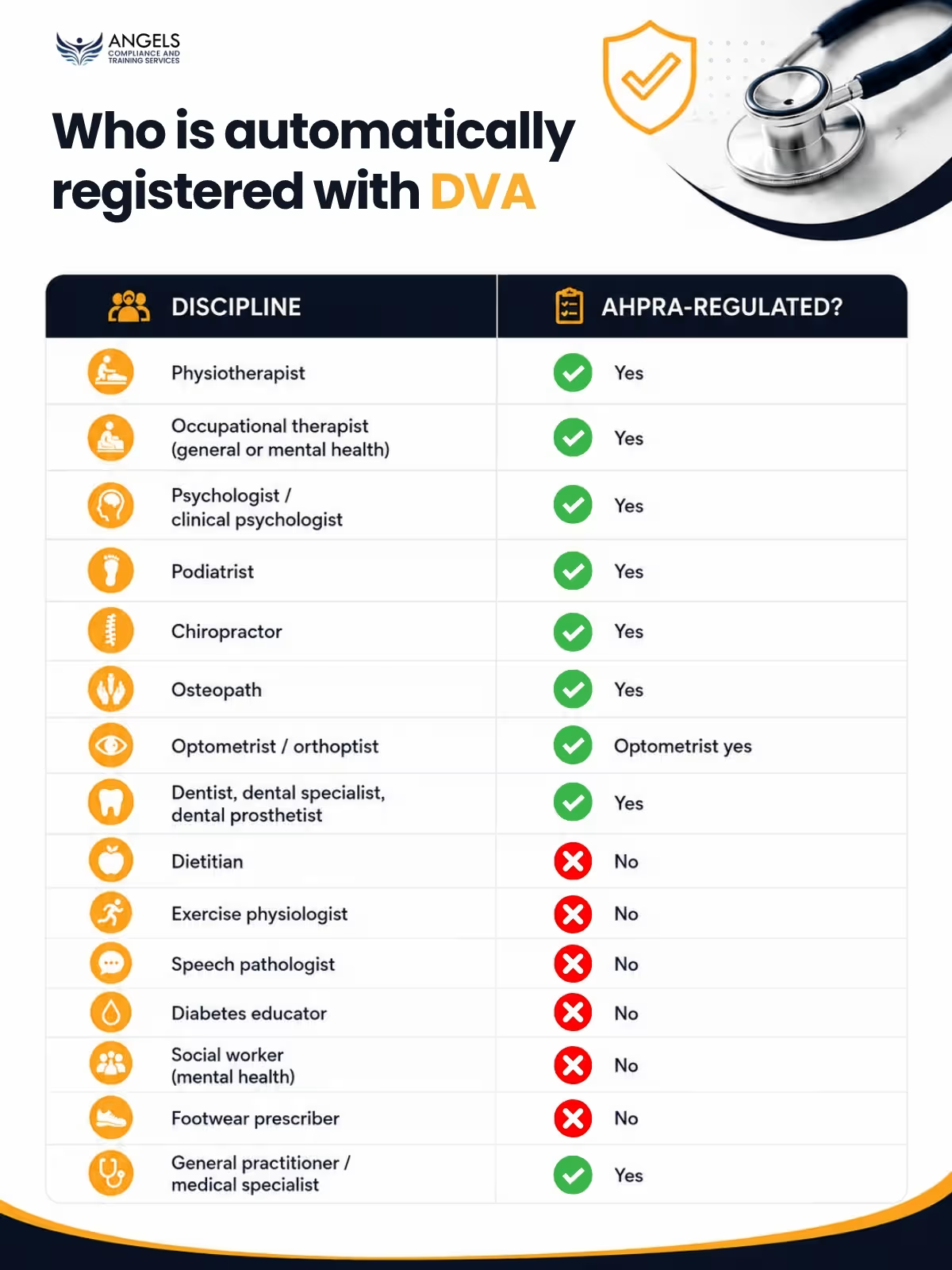
Six of the fifteen categories sit entirely outside AHPRA. That table alone should retire the AHPRA myth.
Who must apply manually
DVA requires direct registration from:
- Neuropsychologists
- Social workers (general) note the split: mental health social workers are automatic, general social workers are not
- Optical dispensers
- Orthotists
- Lymphoedema providers (physiotherapists and occupational therapists only)
The manual pathway is not an online portal. You contact DVA’s provider line on 1800 550 457, confirm your category, and complete the documentation DVA sends you. Some disciplines, optical dispensers in particular, also enter a service agreement with additional conditions attached.
Build a realistic buffer into your business plan. Manual registration is a human process with correspondence in both directions, and it does not move at the speed of a Medicare provider number.
Auto-registration vs manual application: side by side
| Automatic registration | Manual application | |
| Trigger | Medicare provider number issued | You contact DVA directly |
| Application form | None | Category-specific documentation |
| Confirmation | Usually none issued | Written confirmation from DVA |
| Typical timeframe | Effective with your provider number | Allow several weeks |
| How you verify | Test claim, or call 1800 550 457 | DVA confirms in writing |
| Main risk | Assuming you’re not registered and losing billable time | Treating before registration completes |
Five traps that catch allied health providers
This is where most guides stop. These are the issues we actually see cause payment failures.
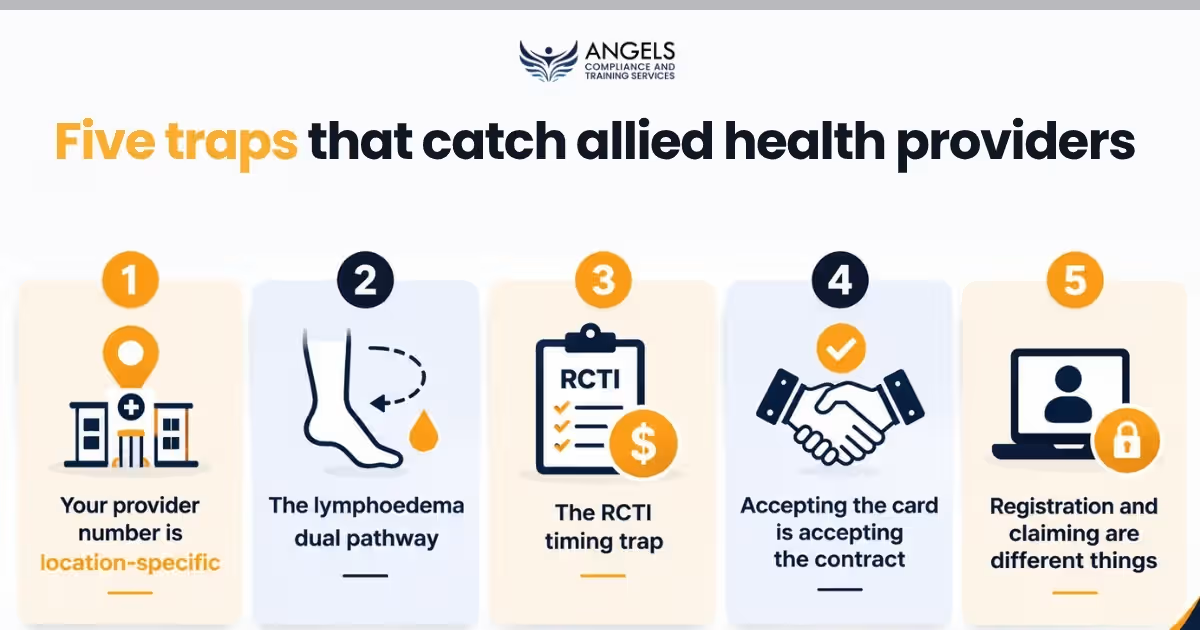
1. Your provider number is location-specific
Medicare provider numbers are tied to a practice location, not to you personally. Open a second clinic, move rooms, add a mobile or telehealth service address, or start contracting to a third site; each needs its own provider number, and DVA registration follows the number, not the practitioner.
Practitioners who expand and keep claiming under the original number generate rejections that look like registration failures but aren’t. Check every site.
2. The lymphoedema dual pathway
A physiotherapist is automatically registered. That same physiotherapist providing lymphoedema services is not lymphoedema is a separate DVA registration category. You can be simultaneously auto-registered for your general caseload and unregistered for a specific service you’re already delivering.
3. The RCTI timing trap
DVA pays through Services Australia under a recipient-created tax invoice (RCTI) arrangement. If you’re registered for GST, you must lodge the D9537 form recording your ABN and GST status.
Here is the part that hurts: DVA is explicit that claims cannot be paid inclusive of GST unless your form has been processed before the claim is assessed. Lodging it later does not retrospectively fix claims already assessed. On a practice-wide caseload, that is a material and entirely avoidable write-off. Lodge the RCTI agreement before you see your first veteran, not after your first rejection.
4. Accepting the card is accepting the contract
When you accept a Veteran Gold or White Card, you agree to DVA’s Notes for Providers and Fee Schedule for your discipline. Veterans must not be charged any gap or additional fee for services DVA funds.
You are not obliged to accept DVA patients, but if you do, the fee schedule is the fee. Practices that quietly bill a top-up are exposed on compliance review. Review the fees and guidelines for allied health providers before you set your DVA rates.
5. Registration and claiming are different things
Being registered does not mean you can claim. You also need a PRODA (Provider Digital Access) account to lodge through Services Australia’s channels. Two separate setups, two separate points of failure.
What happens after registration: the treatment cycle
Under the current allied health treatment cycle, a GP referral covers up to 12 sessions or 12 months, whichever ends first. You develop a Patient Care Plan with the veteran, then write an end-of-cycle report back to the referring GP recommending whether further treatment is warranted. A new referral starts a new cycle, and a veteran can have as many cycles as the GP considers clinically necessary.
Two exceptions worth knowing:
- TPI Gold Card holders receiving physiotherapy or exercise physiology sit outside the cycle. They need an annual or indefinite referral, can have as many clinically necessary sessions as required, and don’t need the 12-session report.
- The At Risk Client Framework allows GPs to arrange tailored 3, 6 or 12-month referrals for veterans with complex needs.
DVA publishes a treatment cycle quick guide worth keeping in your induction pack.
The change nobody is writing about: July 2027
This is the most significant shift to DVA allied health arrangements in over two decades, and it is almost entirely absent from current provider guidance.
Under the 2026–27 Federal Budget, DVA has announced that from July 2027:
- The 12-session/12-month treatment cycle will be removed. Veterans will be able to access more than 12 allied health sessions without a further referral.
- A $5,000 annual threshold will trigger a review of clinical effectiveness.
- Fees paid to allied health providers will increase, described by DVA as the largest increase in more than 20 years.
Consultation with veterans, providers and peak bodies opens from August 2026, and practitioners can register interest in taking part. Full details are on DVA’s changes for allied health from July 2027 page.
For a practice weighing up whether DVA work is worth the administrative overhead, this materially changes the maths. Removing the cycle strips out the end-of-cycle reporting burden and the referral bottleneck, while fees rise. If you have been on the fence about DVA registration, the window to be positioned before that transition is now, and providers who register in 2026 will already be operating when the new arrangements land.
Two caveats: the $5,000 threshold introduces a new clinical justification requirement, so your documentation standards will matter more, not less. And the arrangements are subject to consultation, so specifics may shift.
Your DVA registration checklist
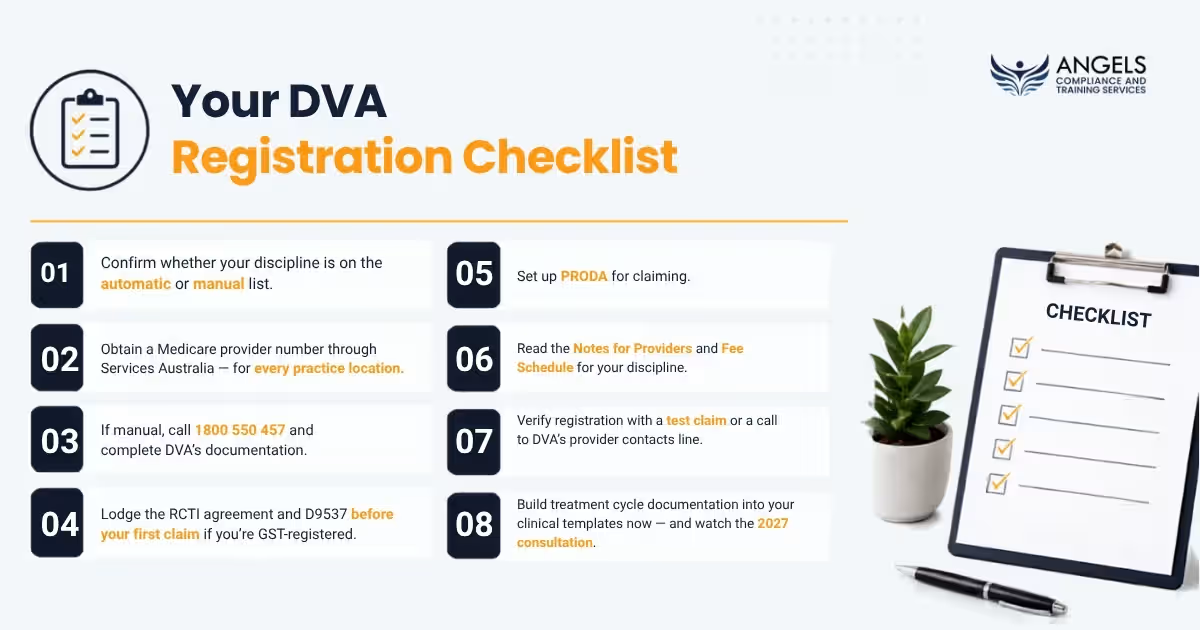
1. Confirm whether your discipline is on the automatic or manual list.
2. Obtain a Medicare provider number through Services Australia for every practice location.
3. If manual, call 1800 550 457 and complete DVA’s documentation.
4. Lodge the RCTI agreement and D9537 before your first claim if you’re GST-registered.
5. Set up PRODA for claiming.
6. Read the Notes for Providers and Fee Schedule for your discipline.
7. Verify registration with a test claim or a call to DVA’s provider contacts line.
8. Build treatment cycle documentation into your clinical templates now and watch the 2027 consultation.
Getting DVA registration right the first time
Most allied health practices don’t fail DVA registration; they lose time and revenue to avoidable sequencing errors: the RCTI lodged too late, the second location never registered, the lymphoedema services claimed under a general registration.
Our DVA Registration Support service confirms your pathway, sequences the paperwork correctly and gets your documentation audit-ready from day one. If you also deliver disability supports, we can align your DVA setup with your NDIS registration and policies and procedures so you’re running one compliance system, not two.
New to provider registration generally? Start with our step-by-step guide to registering as an NDIS provider, then get in touch to map your DVA pathway.
Disclaimer: Angels Compliance and Training Services is an independent compliance consultancy and is not affiliated with the Department of Veterans’ Affairs. This article is general information current at 30 July 2026 and is not legal or financial advice. Always confirm requirements against current DVA guidance.