
For years, NDIS providers have referenced one document to work out what they can charge: the Pricing Arrangements and Price Limits, long known simply as the “Price Guide.” As of 1 July 2026, that document has been replaced. In its place is a new one — the NDIS Pricing Schedule — and it comes with a new name, a new structure, and a set of price changes that move in different directions depending on the support.
If you’re a provider trying to work out what’s current, which prices changed, and whether your invoices are still compliant, the confusion is understandable. The terminology shifted, therapy billing was restructured, and the change landed at the busiest time of the financial year.
This article clears it up. We explain what the Pricing Schedule is, why it replaced the Price Guide, exactly what changed on 1 July 2026, and — most importantly — the practical steps every provider should take now. At Angels Compliance and Training Services, keeping providers compliant through changes like this is what we do every day, so let’s walk through it together.
What actually happened: the Price Guide became the Pricing Schedule
In late June 2026, the National Disability Insurance Agency (NDIA) released its 2026-27 Annual Pricing Review (APR) — its yearly assessment of whether NDIS prices remain fair and sustainable. Alongside it, the NDIA published a new document, the NDIS Pricing Schedule, which took effect on 1 July 2026 and is now the price list you bill against.
The terminology has genuinely been confusing, so here it is in plain English. What people call the “Price Guide” was officially the Pricing Arrangements and Price Limits (often shortened to PAPL). From 1 July 2026, the price list is a new document called the Pricing Schedule instead. The essential purpose is the same — it sets the maximum prices registered providers can charge for support — but the name and format have changed.
Why change the name? It’s tied to the Securing the NDIS for Future Generations Bill, which proposes giving the Minister the NDIS the power to set prices directly. While that plays out, the formal price-limits document has been paused, and the Pricing Schedule serves as the price list. It’s worth being clear on one point: that Bill is not yet law — it was introduced in May 2026, and its passage has been delayed — but the new prices in the Pricing Schedule apply regardless of what happens to the legislation.
What this means for you: The document you’ve always called the “Price Guide” is now the “Pricing Schedule.” It does the same job — setting up your maximum prices — but you’ll need to reference the new document, and some prices have changed.
The headline changes at a glance
Not every price moved, and those that didn’t all move in the same direction. Here’s the summary.
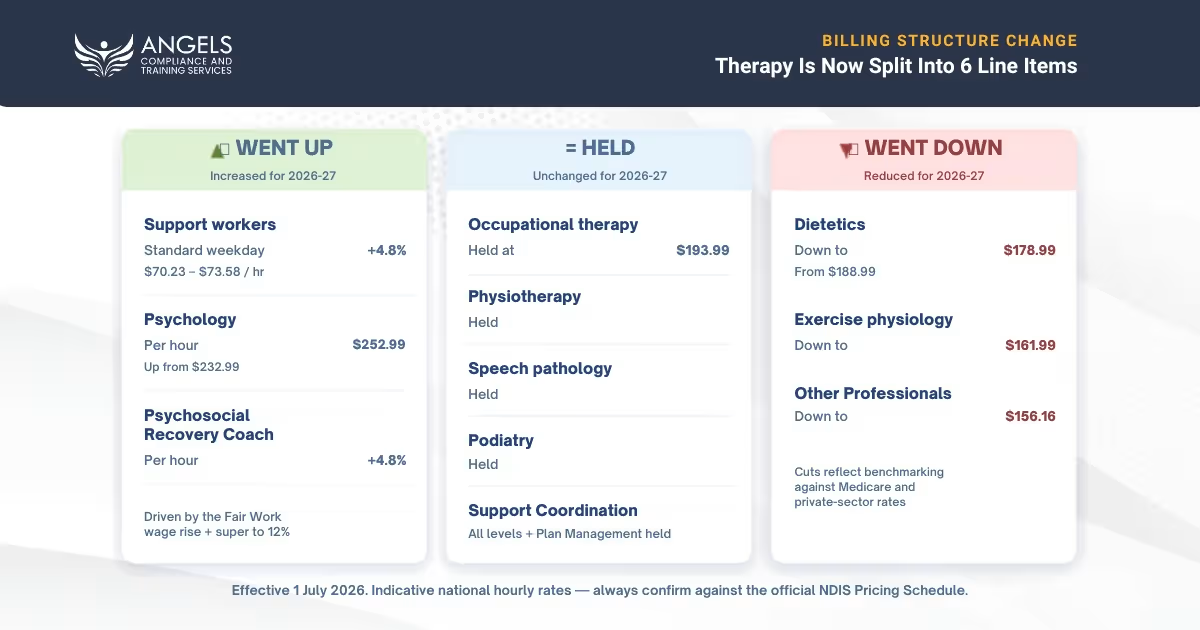
The key movements from 1 July 2026 are:
- Support workers went up. The standard weekday rate rose by around 4.8% (from $70.23 to $73.58 per hour), reflecting the Fair Work Commission’s wage decision and the increase in the superannuation guarantee to 12%.
- Therapy is mixed. Psychology rose (to $252.99 per hour); dietetics and exercise physiology were cut; and occupational therapy, speech pathology, physiotherapy, and podiatry were held unchanged.
- Support Coordination and Plan Management were held. All levels of support coordination and plan management fees are unchanged for 2026-27.
- Psychosocial Recovery Coaching went up by around 4.8% because its pricing is linked to the disability support worker cost model.
- Short-term accommodation (respite) was restructured, with new separate item numbers for support and accommodation.
One important timing note: a small number of changes don’t start until 1 January 2027 — most notably, price differentiation based on registration status for community participation supports. So even once you’ve actioned the July changes, there’s a further date to keep on your radar.
The reason therapies moved in different directions comes down to benchmarking. Rather than adjusting every discipline by the same amount, the NDIA now compares each profession’s rate against what similar services cost outside the NDIS — including Medicare and private billing. Psychology sat below that range, so it rose; dietetics and exercise physiology sat above it, so they fell; occupational therapy was held. It’s a shift toward market-referenced pricing rather than uniform annual increases.
The biggest structural change: therapy line items are now split
If you deliver therapy, this is the change that will affect your day-to-day operations most — and it’s about structure, not just price.
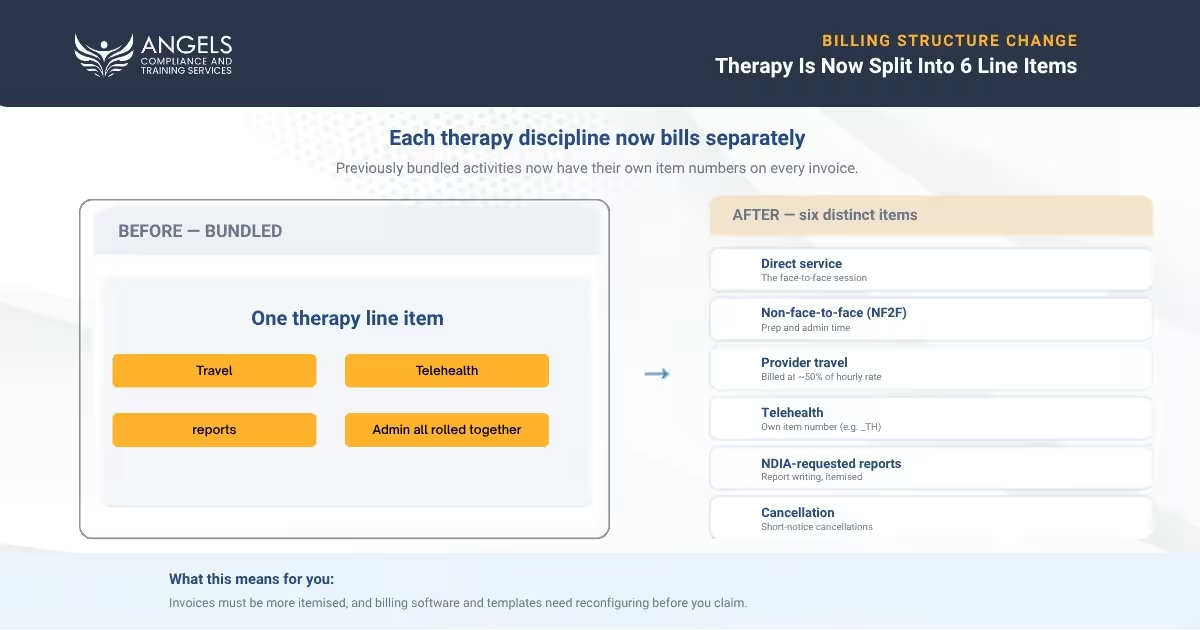
Under the new Pricing Schedule, each therapy discipline now carries six distinct line items: direct service, non-face-to-face (NF2F) time, provider travel, telehealth, NDIA-requested reports, and cancellation.
Previously, these activities were largely bundled together. Now they’re separated, each with its own item number — so a telehealth session, for example, is claimed under a different item number to a face-to-face session, and report-writing time is itemised separately from direct service. Provider travel continues to sit at around 50% of the hourly rate; that cap actually came in the previous year, so what’s genuinely new here is the separation of travel, telehealth, reports, and NF2F time into their own line items rather than the travel rate itself.
Why does it matter beyond admin? Two reasons. First, your invoices now need to be more itemised, which means billing software and templates must be reconfigured before you claim. Second, splitting these activities out creates claim-level data that the NDIA can use to build evidence for future pricing decisions — differentiated rates for telehealth and non-face-to-face time are widely expected to follow, and this line-item structure is how the groundwork is being laid.
What this means for you: If you deliver therapy, your billing setup needs to be updated before your next claim. Get the new line of items configured correctly now, rather than discovering the problem when a claim is rejected.
What providers must do now: the same-week checklist
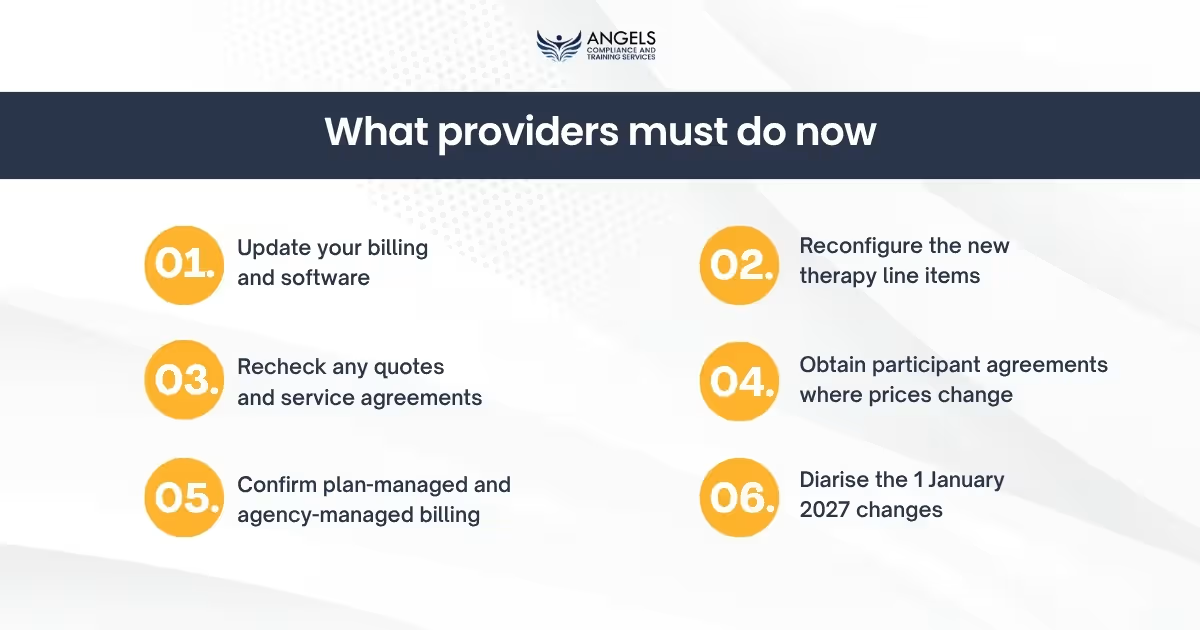
The prices are already live, so this isn’t something to plan for later — it’s a task for this week. Here’s a clear action list:
- Update your billing and software to the new 2026-27 prices across all the support you deliver.
- Reconfigure the new therapy line items (direct service, NF2F, travel, telehealth, reports, cancellation) if you deliver therapy support.
- Recheck any quotes and service agreements that reference specific line-item prices, so nothing is left quoting a superseded rate.
- Obtain participant agreements where prices change. You can’t unilaterally change a service agreement — the participant must agree to any change to their agreed prices before it’s made.
- Confirm plan-managed and agency-managed billing reflects the new rates, so claims aren’t rejected or delayed.
- Diarise the 1 January 2027 changes if community participation supports are part of what you deliver.
Working through this while running a service is exactly the kind of transition we help providers manage cleanly. If you’d rather have an experienced team to confirm your billing and agreements are compliant, that’s a conversation worth having sooner rather than later.
What’s still unsettled (and what to watch)
Being clear about what isn’t finalised is just as important as knowing what changed — it keeps your planning accurate.
- The Securing the NDIS for Future Generations Bill is still before Parliament. Its Senate committee report was pushed back to mid-August 2026, so passage is some months away. If it passes, it will make prices enforceable for unregistered providers too, and bring a range of other reforms.
- A final, more detailed pricing document may still follow. The full Pricing Arrangements and Price Limits and Support Catalogue for 2026-27 may add operational detail — claiming rules, support item use, and system instructions — so it’s worth watching the NDIA’s pricing page for updates.
- Several reviews are underway. Recommendations (not yet confirmed changes) are in progress for the support worker cost model, the plan management fee structure, and a therapy pricing review.
In short: the prices are firm and active now, but the broader pricing landscape is still moving. That’s precisely why having a compliance partner who tracks these developments — so you don’t have to — makes a real difference.
How Angels Compliance and Training Services can help
Pricing changes ripple through your whole operation: your billing, your service agreements, your claims, and the documentation auditors expect to see. We help providers stay compliant through these kinds of transitions.
Whether it’s aligning your billing to the new Pricing Schedule, updating service agreements correctly (with proper participant agreement), or making sure your systems and records stand up at your next audit, our team takes the complexity off your plate. What sets us apart is that we’re practitioners, not just paperwork — we build sustainable compliance you can maintain, and we stay calm, clear, and responsive when the deadlines are tight.
If you’d like confidence that your pricing, agreements, and compliance are all in order for 2026-27, we’re here to help.
Frequently asked questions
Is the NDIS Price Guide still used in 2026
No. From 1 July 2026, the Pricing Arrangements and Price Limits (the “Price Guide”) was replaced by the new NDIS Pricing Schedule. The Pricing Schedule is now the document you bill against.
What is the NDIS Pricing Schedule?
It’s the NDIA’s document setting the maximum prices registered providers can charge for NDIS supports for 2026-27. It was released alongside the 2026-27 Annual Pricing Review and took effect on 1 July 2026, replacing the previous Pricing Arrangements and Price Limits.
When did the new NDIS prices take effect?
1 July 2026. The prices in the Pricing Schedule are firm and active from that date for the 2026-27 financial year.
How much did support worker rates increase in 2026-27?
The standard weekday support worker rate rose by approximately 4.8%, from $70.23 to $73.58 per hour, driven by the Fair Work Commission’s wage decision and the superannuation increase to 12%.
Which NDIS therapy prices went up or down?
Psychology went up (to $252.99 per hour). Dietetics and exercise physiology went down. Occupational therapy, speech pathology, physiotherapy, and podiatry were held unchanged. Therapy billing was also split into six separate line items.
Do I need a participant agreement to change my prices?
Yes. You must discuss any proposed change to an existing service agreement with the participant, and they must agree to the change before it’s made. You can’t change agreed prices unilaterally.
Are the new prices compulsory for unregistered providers?
Registered providers must already follow NDIS price limits. Unregistered providers would only become bound by them if the Securing the NDIS for Future Generations Bill passes — which had not happened at the time of writing.
Stay current, stay compliant
Here’s the bottom line. The document you’ve always called the “Price Guide” is now the NDIS Pricing Schedule, and its prices have been live since 1 July 2026. Support worker and psychology rates rose; several therapies were held, dietetics and exercise physiology were cut — and the change most providers must take action is the split of therapy billing into six-line items.
It’s a lot to absorb, but with prompt action, it’s entirely manageable. Update your billing, check your service agreements, get participant agreement where prices change, and you’ll be on solid ground for the year ahead.
If you’d like expert support making sure your pricing and compliance are right for 2026-27, the team at Angels Compliance and Training Services is ready to help. Book a free consultation today.
This article reflects information available as of July 2026, based on the NDIA’s 2026-27 Annual Pricing Review and NDIS Pricing Schedule. Specific prices and the status of the Securing the NDIS for Future Generations Bill may change. For the most current and authoritative detail, refer to the official NDIS pricing page at ndis.gov.au, and speak with us about your specific circumstances.