

The growing need for compassionate, skilled professionals in Australia’s disability support sector has never been more evident. As the National Disability Insurance Scheme (NDIS) continues to reshape the lives of thousands of Australians living with disabilities, it also opens up new and deeply fulfilling career opportunities.
The NDIS is a government initiative that supports individuals with permanent and significant disabilities, giving them more choice and control over their lives. At the heart of this transformative framework is the NDIS Support Coordinator, a vital role that combines advocacy, resourcefulness, and empathy to help participants navigate their journey toward greater independence.
This article offers a clear roadmap for those who feel a genuine calling to support others. Whether you’re just starting out or already working within the sector, we’ll show you how to transition from passion to profession and make a meaningful impact as an NDIS Support Coordinator.
Understanding the NDIS Landscape
A. What is the NDIS?
The National Disability Insurance Scheme (NDIS) is Australia’s primary support system for people living with permanent and significant disabilities. It aims to improve their quality of life by providing funding for services and equipment tailored to individual goals.
At its core, the NDIS follows a participant-centred model. This means that each individual receives a personalised plan based on their unique needs, aspirations, and circumstances. Whether it’s accessing therapies, finding employment, or improving daily living, the NDIS enables participants to live more independently and participate fully in the community.
B. The NDIS Ecosystem
The NDIS ecosystem is a dynamic collaboration of multiple entities, including:
- Participants – Individuals receiving NDIS support.
- NDIA (National Disability Insurance Agency) – The agency responsible for implementing the scheme.
- Service Providers – Organisations or individuals delivering NDIS-funded services.
- Support Coordinators – Professionals who assist participants in implementing their plans and linking with providers.
These interconnected roles work collectively to help participants access the best possible support.
C. The Significance of Support Coordination
Support Coordinators are the linchpin in this ecosystem. They simplify the complexity of the NDIS for participants, provide guidance, and link them to appropriate supports. Their ultimate goal? To empower individuals to manage their own plans and build a more independent, confident life.
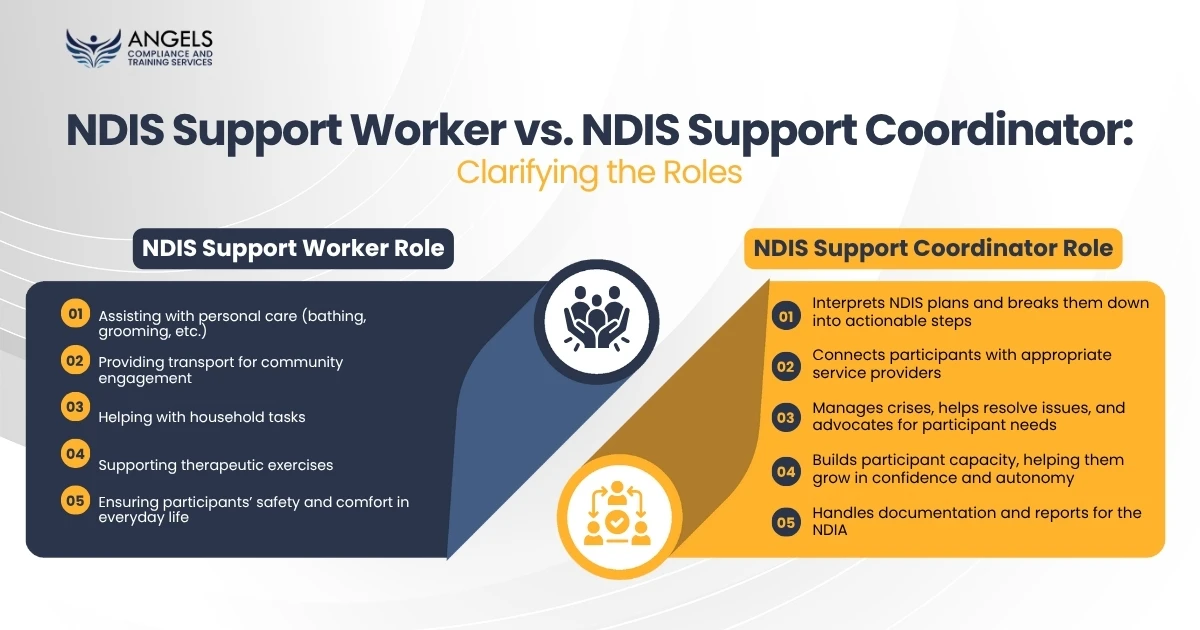
NDIS Support Worker vs. NDIS Support Coordinator: Clarifying the Roles
1. The NDIS Support Worker Role
An NDIS Support Worker delivers direct, hands-on assistance to participants. Their daily responsibilities include:
- Assisting with personal care (bathing, grooming, etc.)
- Providing transport for community engagement
- Helping with household tasks
- Supporting therapeutic exercises
- Ensuring participants’ safety and comfort in everyday life
They focus on implementing the support plan rather than designing or overseeing it.
2. The NDIS Support Coordinator Role
In contrast, an NDIS Support Coordinator takes on a strategic, behind-the-scenes role:
- Interprets NDIS plans and breaks them down into actionable steps
- Connects participants with appropriate service providers
- Manages crises, helps resolve issues, and advocates for participant needs
- Builds participant capacity, helping them grow in confidence and autonomy
- Handles documentation and reports for the NDIA
Support Coordinators focus on capacity building and long-term outcomes, not daily care tasks.
Why the Distinction Matters
While both roles are indispensable, they require different skill sets. Many NDIS Support Workers transition to Support Coordinator roles to take on more responsibility, expand their career, and impact participants’ lives on a broader scale.
NDIS Support Coordinator Duties & Responsibilities
Being an NDIS Support Coordinator is all about making plans come to life, and it takes a broad skill set to do it well.
Core Responsibilities:
- Plan Implementation: Break down the participant’s NDIS plan and connect them with service providers like OTs, physios, or assistive tech suppliers.
- Capacity Building: Help participants develop life skills, decision-making confidence, and the ability to self-manage supports.
- Crisis Resolution & Risk Management: Anticipate and respond to emergencies or potential service breakdowns.
- Advocacy: Ensure the participant’s voice is heard, especially in formal settings like NDIA reviews.
- Budget Management: Guide participants on using their funding appropriately, especially with plan-managed or self-managed funds.
Essential Skills & Qualities
To thrive in this role, one needs a combination of soft and technical skills: 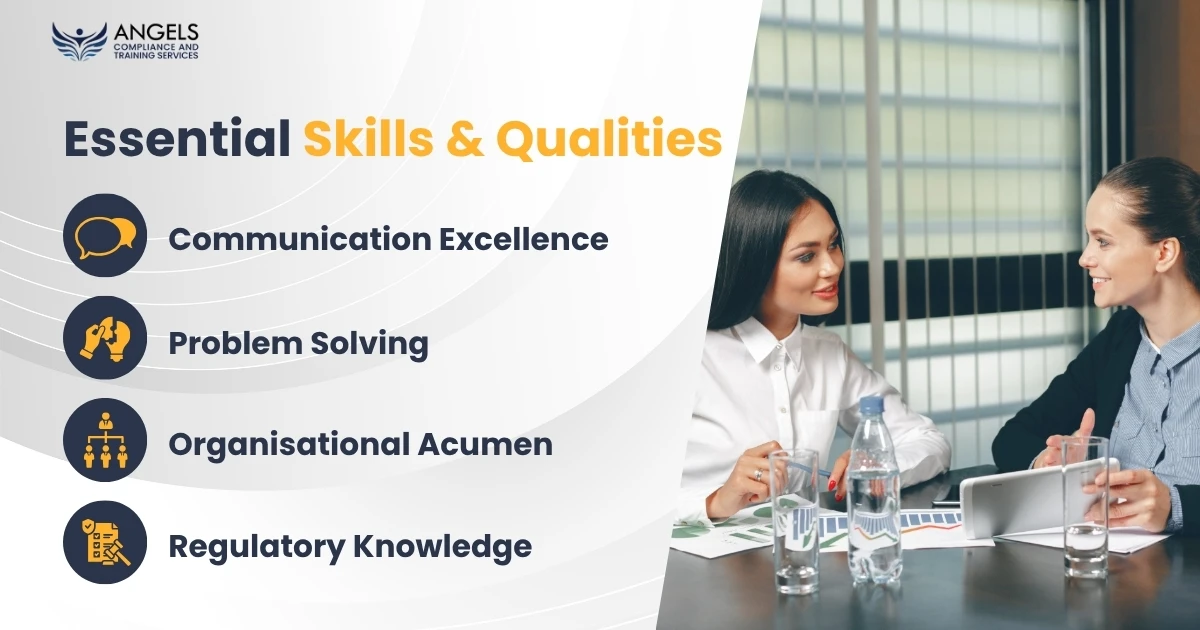
- Communication Excellence – Listening with empathy and responding with clarity
- Problem Solving – Navigating complex challenges with practical, client-centred solutions
- Organisational Acumen – Managing multiple plans and cases efficiently
- Regulatory Knowledge – Staying updated with NDIS rules, price guides, and compliance codes
- Emotional Resilience – Remaining grounded in emotionally intense situations
Together, these skills form the backbone of a capable and compassionate Support Coordinator.
Navigating the Path: Becoming an NDIS Support Coordinator
So, how do you go from caring heart to certified professional? Here’s your roadmap.
1. Education and Qualifications
* Relevant Degrees
If you’re serious about building a long-term career, consider degrees in:
- Social Work
- Community Services
- Disability Studies
- Occupational Therapy
- Psychology
2. Vocational Training
Shorter qualifications still pack a punch:
- Certificate IV in Disability
- Diploma of Community Services
These are solid foundations for anyone starting out or switching careers.
3. Specialised NDIS Support Coordination Courses
This is where general knowledge becomes NDIS-specific expertise. A targeted course will cover:
- NDIS legislation & compliance
- Plan review processes
- Case management
- Ethical decision-making
- Capacity building strategies
4. Gaining Real-World Experience
You don’t always need to start with a fancy degree. What matters most is experience.
- Support Worker Experience: Great insight into participant needs
- Mental Health & Aged Care: Transferable skills galore
Compliance & Registration
- NDIS Worker Screening Check – A mandatory check for all workers
- NDIS Code of Conduct & Safeguards – Learn and adhere to these requirements
- ABN Registration – Required if operating independently as a Support Coordinator
- Volunteering: Start small disability charities are always looking for help.
At Angels Compliance and Training, we’re committed to guiding you every step of the way on your journey to becoming a qualified NDIS Support Coordinator. From delivering industry-specific training programs that cover real-world coordination scenarios to assisting with NDIS compliance, registration, and ABN setup, we ensure you’re fully prepared to step into the role with confidence. Our expert team provides ongoing support, mentoring, and resources tailored to your growth so you’re not just ready to do the job, but ready to make an impact.
Continuous Professional Development (CPD)
- Attend webinars, seminars, and conferences
- Subscribe to updates from the NDIS Commission
- Participate in mentoring or peer support groups
From Purpose to Impact: Why This Role Matters
NDIS Support Coordinators play a truly transformative role in the lives of individuals living with disabilities. Every day, they help participants navigate their NDIS plans with clarity and confidence, supporting them to reach both personal and professional goals. Whether it’s assisting someone in finding meaningful employment, enrolling in education, or building the skills needed to live more independently, Support Coordinators are the steady hand guiding participants toward empowered, self-directed lives.
NDIS Support Coordinators change lives every day. Their work helps participants:
- Reach personal and professional goals
- Engage confidently with the community
- Access healthcare, education, and employment services
Professionally, Support Coordinators enjoy a deeply rewarding career that offers growth, diversity, and emotional fulfilment. They’re not just fulfilling job roles; they’re shaping a more inclusive, empowered society.
Tips for Success and Building Your Career
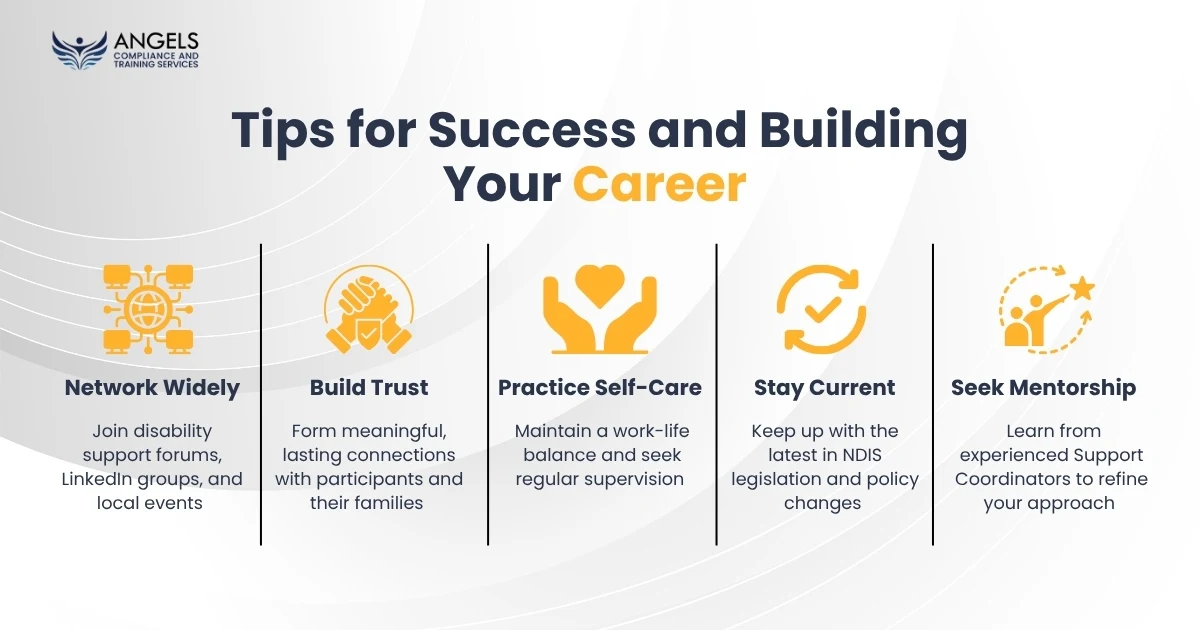
- Network Widely – Join disability support forums, LinkedIn groups, and local events
- Build Trust – Form meaningful, lasting connections with participants and their families
- Practice Self-Care – Maintain a work-life balance and seek regular supervision
- Stay Current – Keep up with the latest in NDIS legislation and policy changes
- Seek Mentorship – Learn from experienced Support Coordinators to refine your approach
Conclusion
Becoming an NDIS Support Coordinator is more than a career move; it’s a meaningful journey of impact. This role blends empathy, strategy, and advocacy to help participants live with greater independence and confidence. Whether you’re upskilling from a support worker role or just starting out, the opportunity to change lives is real. But beyond qualifications, success in this space is about heart showing up, building trust, and empowering people through complex moments. Every plan you implement creates a ripple of positive change. If you’re driven by purpose, this is your chance to turn that passion into lasting impact for others and yourself.
So, are you ready to make your passion your profession?
