

As an NDIS provider, you’re managing participant goals, staff rosters, documentation, and audits and compliance can feel like just another task to tick off. But what if it wasn’t a burden, but your greatest asset? The NDIS framework is complex, and operating with “reactive compliance” often leads to stress, inconsistency, and even participant risk. The real cost of neglecting compliance is not just fines it’s burnout and damaged trust. This article explores how NDIS compliance training transforms compliance into empowerment, helping staff work confidently, enhance care quality, and strengthen your organisation’s reputation for excellence.
Understanding the True Cost of Neglecting NDIS Compliance
The Everyday Reality for Providers
As an NDIS provider, you’re managing participant goals, coordinating staff rosters, reviewing documentation, and ensuring service quality, all while navigating the ever-changing landscape of compliance. It’s no surprise that compliance can often feel like another administrative burden, something to “just get through” before the next audit. But what if compliance wasn’t a task to endure, but a strategic asset that drives excellence and trust across your organisation?
The Hidden Consequences of Reactive Compliance
The NDIS framework is comprehensive and continually evolving. Many providers operate with a reactive approach, addressing compliance issues only when problems arise or audits are due. While this may appear efficient in the short term, it often leads to errors, inconsistent practices, and significant stress for both management and frontline staff. The consequences of non-compliance extend beyond fines or potential deregistration; they include staff burnout, compromised participant outcomes, and lasting reputational damage.
“Just getting by” in compliance creates a ripple effect. It weakens organisational culture, reduces team confidence, and signals to participants that safety and quality may not be top priorities. Over time, this approach can undermine the trust the foundation of every successful NDIS service.
Transforming Compliance into a Strength
This article aims to shift that perception. It explores how NDIS compliance training transforms compliance from a checkbox activity into a cornerstone of empowerment and professional excellence. When your staff are equipped with the right knowledge and frameworks, compliance becomes second nature, leading to safer practices, stronger teams, and higher-quality outcomes for participants.
Core Components of Effective NDIS Compliance Training
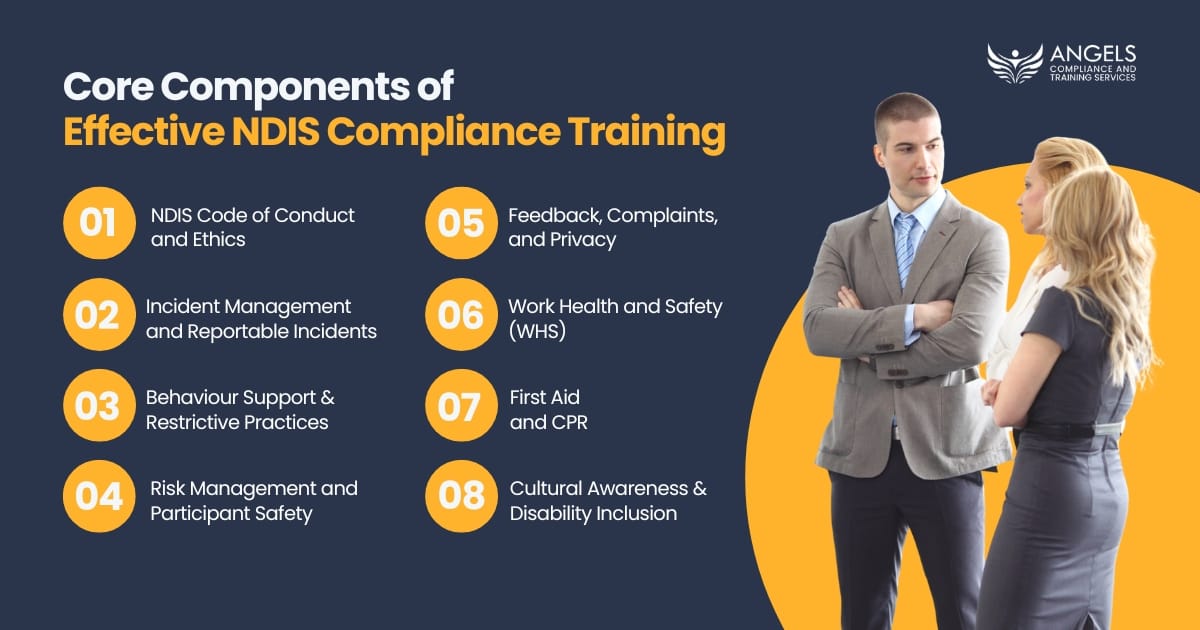
Staying compliant under the NDIS framework requires more than a one-time induction course. It demands a structured training program made up of targeted modules, each aligned with the NDIS Practice Standards and the obligations set by the NDIS Quality and Safeguards Commission. These modules not only ensure compliance but also empower staff to deliver safe, ethical, and person-centred care.
The following are the core training components that every NDIS provider should incorporate into their compliance framework.
1. NDIS Code of Conduct and Ethics
This foundational module teaches the principles of respect, honesty, integrity, and professional boundaries.
Why it matters: It sets the ethical foundation for all roles, frontline, administrative, and leadership, ensuring every staff member acts with professionalism and empathy.
Practical outcomes: Staff can identify conflicts of interest, maintain dignity in all interactions, and foster a workplace culture grounded in accountability.
2. Incident Management and Reportable Incidents
This module focuses on identifying, responding to, documenting, and reporting incidents in line with NDIS Commission standards.
Why it matters: Understanding timeframes and definitions ensures both participant safety and legal compliance.
Practical outcomes: Staff recognise and escalate incidents correctly, use approved reporting systems, and help prevent future occurrences through review and learning.
3. Behaviour Support and Restrictive Practices
Centred on positive behaviour support and least-restrictive principles, this module equips staff to work ethically with participants who display complex behaviours.
Why it matters: Behaviour support is a high-risk area with strict legal safeguards.
Practical outcomes: Staff confidently implement Behaviour Support Plans, record restrictive practices appropriately, and uphold each participant’s autonomy.
4. Risk Management and Participant Safety
Teaches staff how to identify hazards, manage individual risk profiles, and implement safety measures for participants and staff.
Why it matters: Preventing harm is more ethical and effective than reacting to it.
Practical outcomes: Risks are documented, monitored, and escalated early, ensuring a safe environment for all.
5. Feedback, Complaints, and Privacy
Focuses on handling complaints, protecting confidentiality, and managing consent in line with governance standards.
Why it matters: Continuous improvement depends on transparent feedback and privacy compliance.
Practical outcomes: Participants feel heard, issues are resolved respectfully, and documentation meets NDIS and privacy obligations.
6. Work Health and Safety (WHS)
Covers safe workplace practices, hazard reporting, emergency procedures, and injury prevention.
Why it matters: WHS compliance is essential for both staff and participant safety.
Practical outcomes: Teams maintain hazard-free environments, follow emergency protocols, and promote a proactive safety culture.
7. First Aid and CPR
Equips staff with lifesaving skills to respond to medical emergencies.
Why it matters: Immediate response can prevent serious harm or save lives during participant incidents.
Practical outcomes: Workers perform basic first aid, manage emergencies calmly, and meet certification requirements for NDIS roles.
8. Cultural Awareness and Disability Inclusion
Includes Cultural Awareness, Diversity, and Psychosocial Disability Support.
Why it matters: Understanding cultural diversity and the unique needs of participants with psychosocial disabilities ensures inclusive, person-centred care.
Practical outcomes: Staff deliver support that respects cultural backgrounds, mental health considerations, and the individuality of every participant.
NDIS compliance training is more than a procedural obligation; it’s a structured, values-driven process that builds competence, confidence, and accountability across your organisation. Together, these eight modules create a comprehensive compliance framework that empowers staff, enhances participant safety, and builds an organisation recognised for quality, trust, and professionalism within the NDIS community.
Participant Safety: The Non-Negotiable Link Between Training and Safeguarding
1) Proactive risk identification
- What good looks like: Staff spot hazards early in homes, transport, meds, behaviour changes, and respond before harm occurs.
- Result: Fewer incidents, safer environments, more confident participants and families.
2) Mastering incident management and reporting
- What good looks like: Staff recognise incident types, follow timeframes, complete accurate records, and escalate appropriately.
- Result: Swift, transparent responses that protect participants and satisfy legal obligations.
3) Upholding rights and dignity in high-risk areas
- What good looks like: Teams implement Behaviour Support Plans faithfully, seek genuine consent, and apply least-restrictive strategies.
- Result: A rights-based culture that protects people and your registration.
Transforming Compliance into Confidence with Angels Compliance Coaching
One-off training sessions rarely deliver lasting change. A two-hour webinar might tick a compliance box, but it won’t transform your team’s mindset or embed a culture of quality. True compliance goes beyond theory; it’s about empowering staff to apply standards confidently in everyday practice. That’s where Angels Compliance and Training makes the difference.
Our Compliance Coaching Program turns complex NDIS requirements into clear, actionable systems. We don’t just teach; we guide, mentor, and support your team to implement compliance in real-life settings. Through hands-on sessions, templates, and tailored mentoring, we help your organisation build workflows that are simple, sustainable, and audit-ready.
What sets us apart is our practical experience and commitment to results. Our programs are developed by NDIS compliance specialists and auditors who understand the challenges providers face from incident reporting to behaviour support and documentation. We work side by side with your team to co-design processes that work long-term, ensuring consistency, confidence, and compliance at every level.
Ready to turn compliance into capability?
Book your free consultation and discover how ongoing coaching can transform your compliance culture into your organisation’s greatest strength.
Conclusion: Turning Compliance into a Competitive Advantage
When implemented effectively, NDIS compliance training is not about ticking boxes it’s about building a culture of respect, safety, and excellence. It empowers staff with clarity and confidence, helping them understand not just the rules, but the purpose behind them.
Strong compliance training protects participants through proactive risk management and rights-based care, while also strengthening organisational performance. It ensures smoother audits, fewer incidents, and a reputation built on trust and quality.
For providers, compliance becomes more than an obligation it becomes a strategic advantage. A well-trained team delivers consistent, person-centred care and sets your organisation apart in a competitive sector.
If you’re ready to move from reactive compliance to embedded excellence, start today. Turn compliance into capability and capability into meaningful outcomes for your staff, participants, and organisation.