

Workforce trends are shifting rapidly toward healthcare jobs and disability support careers, especially in the context of the National Disability Insurance Scheme (NDIS). Rising demand for disability services, an ageing population, and changes in care preferences have created significant opportunities for support workers, allied health assistants, and community care professionals.
For organisations such as Angels Compliance and Training Services, this trend highlights the critical need for comprehensive workforce development and industry-aligned support.
In this blog, we explore what is driving this workforce shift, why upskilling is essential, and how service providers can prepare for growth.
Why Healthcare and Disability Support Careers Are Growing
1. Rising Demand for Disability Support Services
The number of Australians accessing NDIS support continues to grow. With higher disability prevalence and increased longevity, demand for NDIS support workers, community care professionals, and allied health assistants is climbing.
People often search:
- NDIS supports jobs in Australia?
- Disability support workers in Australia?
These trends show a clear shift toward care‑focused roles.
2. Employment Growth in Health Care and Social Assistance
The Health Care and Social Assistance sector is one of Australia’s largest employment contributors. High job growth makes this field attractive for long‑term careers and shows sustained demand for skilled professionals.
3. Workforce Gaps and Regional Challenges
Despite workforce expansion, many providers struggle with staffing shortages, especially in rural and regional parts of Australia. Skilled disability support workers and care specialists are in high demand, making training and compliance services more important than ever.
Why Upskilling Is Essential for NDIS Roles
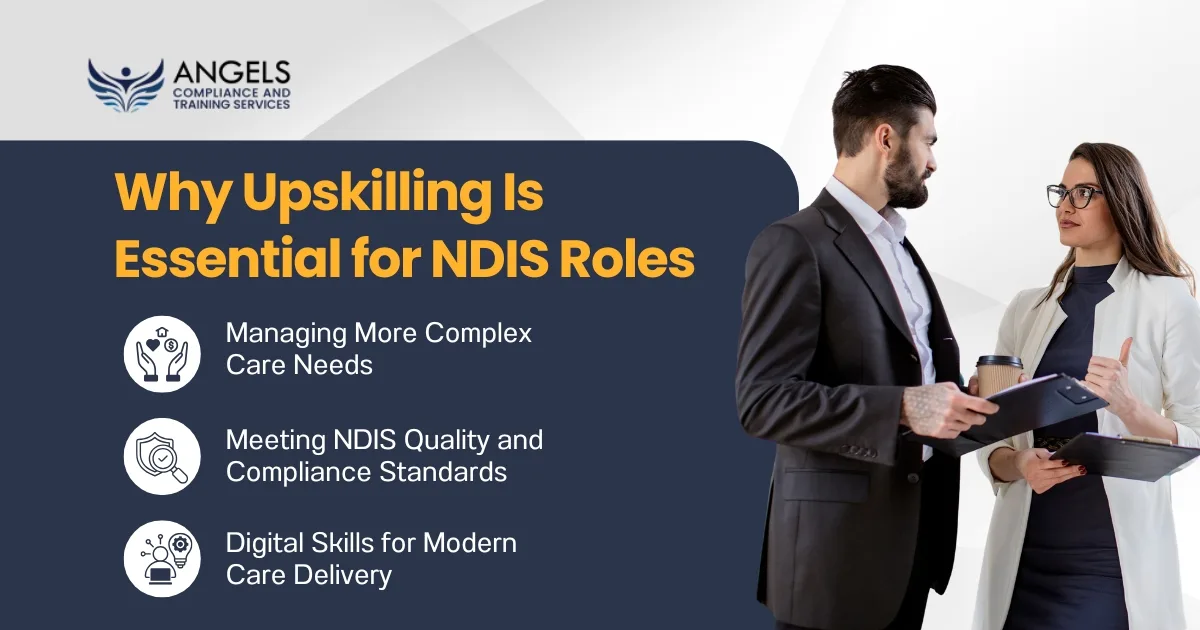
1. Managing More Complex Care Needs
Supporting people with complex disability or behavioural needs requires advanced training.
Workers must be skilled in areas such as:
- Behaviour support
- Allied health collaboration
- Person‑centred practice
Angels Compliance and Training Services offers specialised courses designed to meet these essential skill requirements.
2. Meeting NDIS Quality and Compliance Standards
Modern disability services must meet strict quality and compliance requirements, including documentation, risk management, and reporting.
Providers frequently ask:
- What are the new NDIS compliance standards?
- How can I stay NDIS compliant as a disability provider?
Our expert consultants help with ongoing compliance and preparation for NDIS audit requirements so providers can maintain high standards.
3. Digital Skills for Modern Care Delivery
Digital literacy is becoming crucial for rostering, client management systems, electronic notes, and compliance tools. Training in technology helps staff work more efficiently and supports provider compliance reporting.
Key Skills Every Support Worker Should Develop
a. Health and Behaviour Support Competency
Training in physical care, behavioural understanding, and allied health foundations equips workers to support participants safely and professionally.
b. Technology and Documentation Skills
Proficiency in digital tools reduces administrative burden, improves record accuracy, and ensures compliance with NDIS quality standards.
c. Soft Skills for Better Participant Outcomes
Strong communication, empathy, and cultural sensitivity enhance the quality of service and participant satisfaction, and this aligns with person‑centred care principles.
Benefits of Upskilling for Workers and the Sector
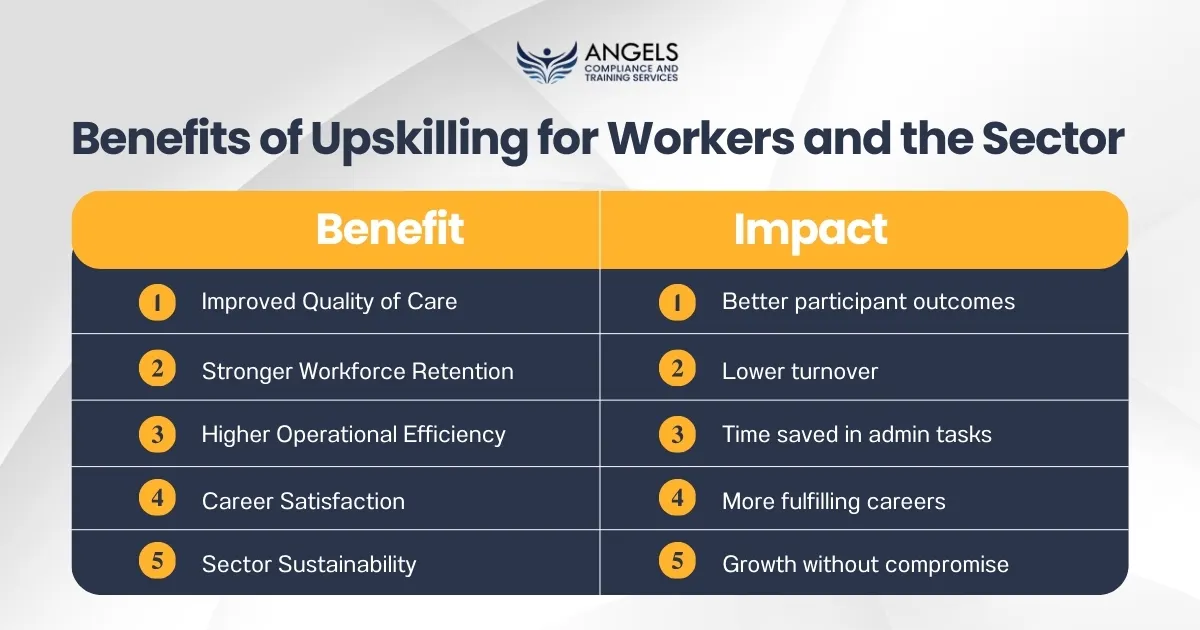
| Benefit | Impact |
| Improved Quality of Care | Better participant outcomes |
| Stronger Workforce Retention | Lower turnover |
| Higher Operational Efficiency | Time saved in admin tasks |
| Career Satisfaction | More fulfilling careers |
| Sector Sustainability | Growth without compromise |
How Angels Compliance and Training Services Supports Workforce Growth
1. Expert NDIS Registration and Renewal Support
Becoming an NDIS provider requires detailed preparation. Our team assists organisations with:
- NDIS provider application
- NDIS renewal submission
- NDIS audit readiness
This ensures new and existing providers remain compliant and competitive.
2. NDIS Compliance and Audit Preparation
Ongoing compliance can be complex. Angels Compliance and Training Services helps providers:
- Implement quality management systems
- Maintain documentation best practices
This makes audit time less stressful and improves service quality.
3. Tailored Training Programs for Disability Support Workers
We provide training modules that include:
- Allied health support training
- Behaviour support and mental health awareness
- Technology and documentation skills
- Soft skills and cultural competency development
These programs help workers grow their careers and deliver high‑quality, person‑centred support.
Overcoming Workforce Challenges in Disability Support
* Staff Shortages and Turnover
Attracting and keeping skilled workers remains a national challenge. Providers can improve retention by offering training pathways, mentorship, and professional growth opportunities.
* Training Access and Geographic Inequality
Remote and regional workers may lack access to quality training. Online and blended learning programs are essential for broad access.
* Growing Administrative Burdens
Increased documentation and compliance demands can overwhelm staff without proper support and digital training.
Actionable Recommendations for Sustained Workforce Growth
a. Expand Training and Credentials Nationwide
Providers, educational institutions, and government bodies should work together to expand credential programs, micro‑credentials, and continuous professional development, including remote learning.
b. Highlight Career Pathways and Specialisation Tracks
Formal career ladders help workers see long‑term futures in healthcare and disability support.
c. Invest in Digital Tools and Training Support
Digital infrastructure investment paired with training improves productivity and compliance workflows.
d. Focus on Mental Health and Staff Wellbeing
Reducing burnout with supportive workplace practices strengthens retention.
e. Support Stakeholder Collaboration
Collaboration across training institutions, government, and provider networks ensures consistency and quality across the disability support workforce.
Conclusion
Workforce trends in Australia are clearly shifting toward healthcare, disability support, and allied care roles, driven by demographic change and expanding NDIS support. This shift represents not just job growth but space for meaningful, stable careers.
Upskilling, compliance readiness, and strategic use of training services are key to preparing a competent, compassionate workforce. Angels Compliance and Training Services supports this by offering NDIS registration assistance, renewal support, audit preparation, compliance management, and tailored training, helping both workers and providers succeed.
Frequently Asked Questions
1: Why are healthcare jobs in demand in Australia now?
Demand is rising due to population ageing, increasing disability rates, and expanded support under NDIS and community care services.
2: What skills are needed for NDIS support work?
Key skills include behaviour support knowledge, digital literacy, person‑centred practice, and strong communication.
3: How can I become an NDIS provider?
To become an NDIS provider you must complete registration, meet quality standards, and prepare documentation. Angels Compliance and Training Services can assist with this process.
4: What training is essential for disability support workers?
Behaviour support, allied health basics, digital documentation, and cultural competency are essential areas.