
If you have been operating in the NDIS space for a few years, you might view the NDIS Code of Conduct as “old news,” basic rules you learned during your initial orientation.
In 2026, that mindset is a liability.
The regulatory landscape has shifted. We are moving away from the “education first” phase of the NDIS Commission into an era of active enforcement. With the introduction of mandatory registration for SIL and Platform providers and a crackdown on reportable incidents, the Code of Conduct is no longer just a poster on your wall; it is the primary tool the Commission is using to issue civil penalties.
At Angels Compliance and Training Services, we have seen the shift firsthand during recent audits. Auditors are digging deeper, looking for evidence of how the Code is lived, not just listed.
This guide covers what every provider, registered or unregistered, must know to survive the 2026 regulatory shake-up.
The New 2026 Landscape: Why This Year is Different
The biggest misconception we see is that the Code of Conduct is static. While the text of the Code hasn’t changed, the consequences for breaching it have.
a. The End of “Transitional” Arrangements
2026 marks a critical deadline for Supported Independent Living (SIL) and Platform Providers. If you were previously operating as an unregistered provider in these categories, the grace period is effectively over.
- For SIL Providers: Mandatory registration is now the standard to ensure housing safety and proper oversight.
- For Platform Providers: New rules require you to have robust governance systems. You can no longer claim to be “just a tech connector.” If you connect participants to workers, you are accountable for the quality and safety of that support.
b. The “Civil Penalty” Era
Recent legal precedents have emboldened the NDIS Commission. We are seeing hefty fines for providers who miss reporting deadlines.
- The Risk: Failing to report a serious incident within 24 hours is technically a breach of the Code’s “Integrity” and “Safety” principles. In 2026, this is being prosecuted as a civil penalty breach, with fines potentially reaching hundreds of thousands of dollars for systemic failures.
The 8 Principles of the NDIS Code of Conduct (Refreshed for 2026)
The Code applies to all NDIS providers and workers. However, the interpretation of these principles has evolved. Here is how to apply them in the current climate:
1. Act with respect for individual rights
This goes beyond “being polite.” In 2026, auditors are checking if you respect a participant’s right to risk. Are you over-protecting participants to the point of restricting their freedom? If so, you may be breaching this principle.
2. Respect privacy
2026 Context: With the rise of digital platforms, data privacy is under the microscope. If you use an app to roster staff or store participant notes, how secure is it? A data breach is now considered a breach of the Code.
3. Provide support in a safe and competent manner
This links directly to the NDIS Workforce Capability Framework. You cannot just hire “anyone with a heart.” You must demonstrate that your staff have the specific skills (competencies) for the high-intensity supports they deliver.
4. Act with integrity, honesty, and transparency
The Marketing Trap: Be careful with your advertising. Claims like “We can get you more funding” or “Guaranteed approvals” are now flagged as misleading conduct under this principle.
5. Promptly take steps to raise and act on concerns
Do you have a culture of silence? If a junior support worker is afraid to report a near-miss, your organisation is non-compliant.
6. Take all reasonable steps to prevent violence, neglect, and abuse
This is the heavy hitter. Most reportable incidents stem from a failure here. “Reasonable steps” now includes proactive staff training and rigorous background checks before a worker enters a home.
7. Take all reasonable steps to prevent sexual misconduct
Zero tolerance. This requires mandatory reporting to the Commission and often the police.
8. Ensure Fair Pricing Without Unjustified Premiums
Providers must not charge significantly higher prices for NDIS participants than for other clients unless there is a valid reason.
Deep Dive: The “Fair Pricing” Obligation
A frequently overlooked aspect of the Code is Integrity in Pricing.
The NDIS Commission has released specific guidance on this: You cannot charge a participant more than a non-participant for the same service.
If you run a cleaning business and charge private clients $40/hour, but charge NDIS participants the full price guide limit of $50+/hour just because they have funding, you are likely breaching the Integrity principle of the Code.
Our Advice: Review your price list. Ensure your dual-pricing structures (NDIS vs. Private) are justifiable based on the additional administrative burden of the NDIS, not just price-gouging.
2026 Regulatory Priorities: Restrictive Practices & Reporting
If you only take one thing from this article, let it be this: The Commission is targeting Restrictive Practices.
The Danger Zone
Many providers use restrictive practices (like chemical restraint or environmental locks) without realising it. In 2026, unauthorised restrictive practices are a top enforcement priority.
- The 5-Day Rule: Any unauthorised use of a restrictive practice must be reported within 5 business days.
- The 24-Hour Rule: Any reportable incident involving serious injury, abuse, neglect, or sexual misconduct must be reported within 24 hours.
The Consequence: We have seen providers fined per day for late reporting. Ensure your Incident Management System (IMS) triggers these alerts automatically.
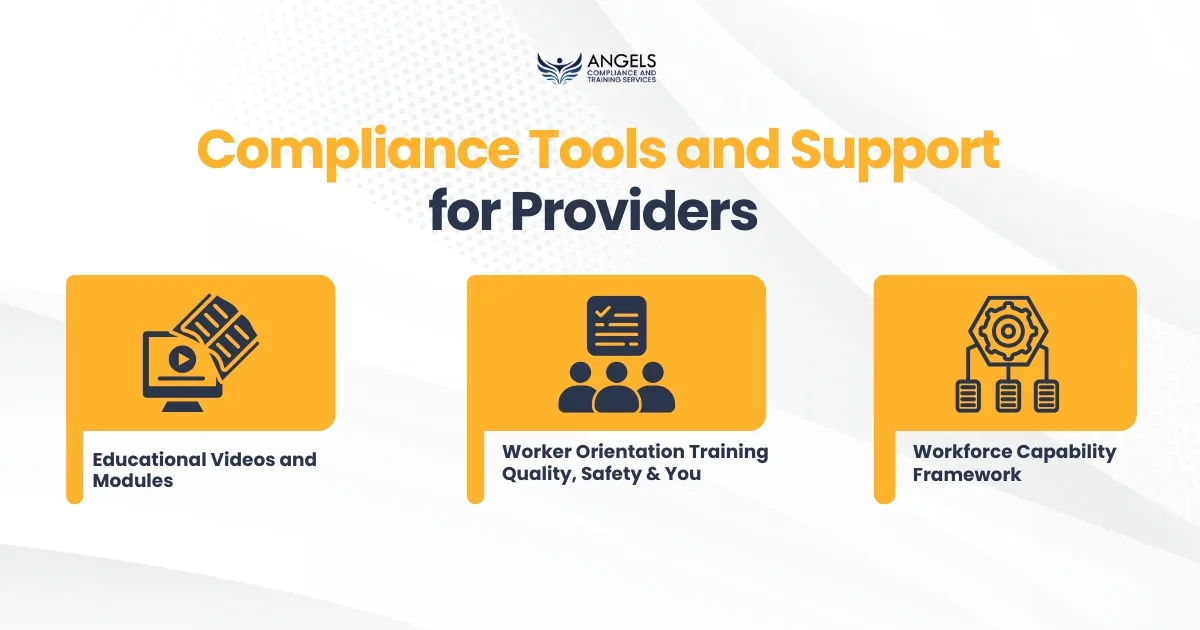
Compliance Tools and Support for Providers
Understanding the Code is one thing; putting it into practice is another. Fortunately, the NDIS Commission provides several resources to help you embed compliance throughout your organisation.
* Educational Videos and Modules
The Commission publishes practical videos and training modules that explain each element of the Code in real‑world terms, perfect for onboarding and ongoing staff learning.
* Worker Orientation Training Quality, Safety, and You
This online course supports workers to learn what compliance looks like from a participant’s perspective and is essential for new staff members.
* Workforce Capability Framework
This framework helps translate high‑level Code expectations into observable behaviours and skills across roles, a powerful tool for policy development and performance assessment.
Common Compliance Challenges and Tips
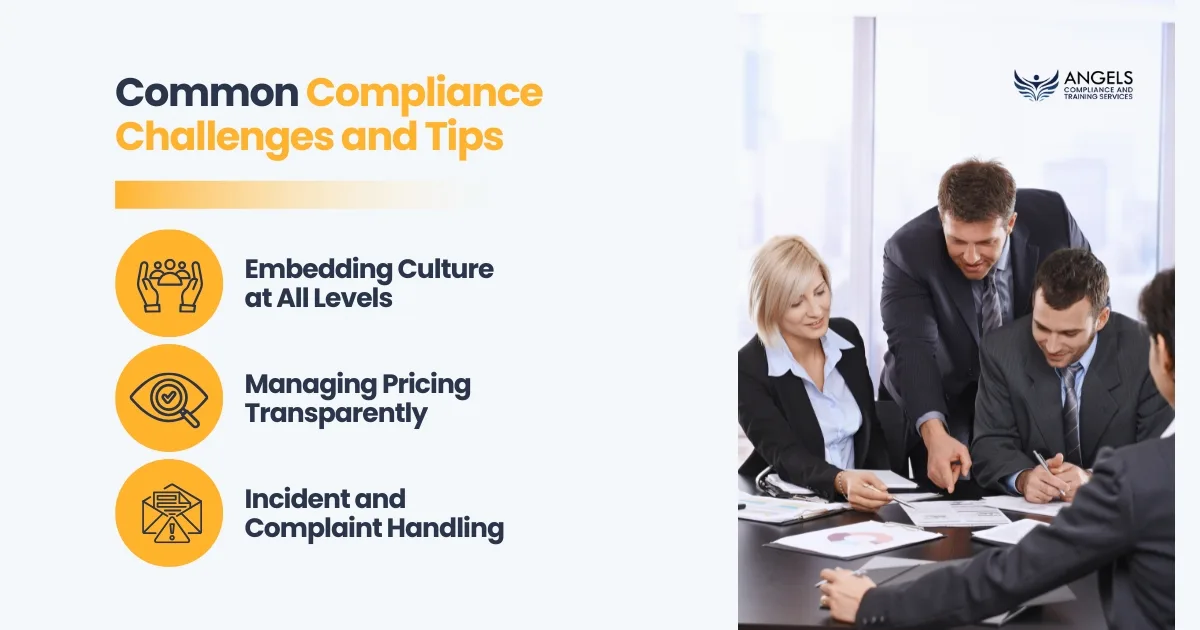
Making the Code part of your daily operations isn’t automatic. Providers often struggle with:
a. Embedding Culture at All Levels
Compliance isn’t just a policy; it’s a mindset that needs reinforcement through training, supervision, and leadership.
b. Managing Pricing Transparently
Ensure your pricing policies align with fair pricing expectations and communicate them clearly to participants.
c. Incident and Complaint Handling
Develop robust systems for reporting, managing, and learning from safety concerns and participant feedback.
At Angels Compliance and Training Services, we help providers audit their current systems, develop compliance frameworks, and train teams to meet both Code expectations and broader regulatory requirements.
Practical Compliance Checklist for 2026
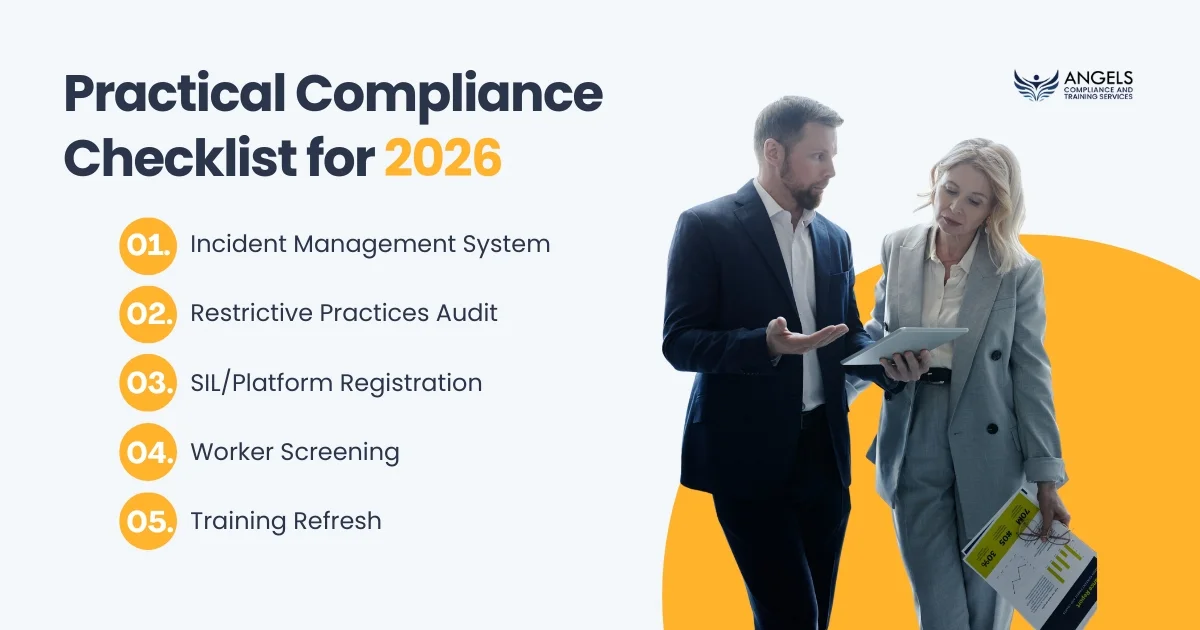
How does your organisation stack up? Use this checklist to self-assess before your next audit.
- Incident Management System: Can you generate a report within 2 hours of an incident occurring?
- Restrictive Practices Audit: Have you reviewed all participants to ensure no “hidden” restraints (e.g., locking the fridge, medication to sedate) are being used without a Behavior Support Plan?
- SIL/Platform Registration: If you fall into these categories, have you started your registration or renewal application?
- Worker Screening: Are all your workers (including contractors) verified in the NDIS Worker Screening Database?
- Training Refresh: Have every single staff member completed the “Quality, Safety and You” module in the last 12 months?
Navigate 2026 with Confidence
The shift to mandatory registration and stricter enforcement doesn’t have to be a threat to your business. It is an opportunity to professionalise and stand out as a premium provider.
At Angels Compliance and Training Services, we don’t just tell you the rules; we help you build the systems to follow them effortlessly. Whether you are a new Platform Provider facing your first audit or an established SIL provider needing a compliance health check, we are here to support you.
Is your documentation ready for the 2026 standards? Contact Us Today for a Compliance Gap Analysis and ensure your business is audit-ready and future-proof.